Nine Votes. That's How Much Your Absence Cost.
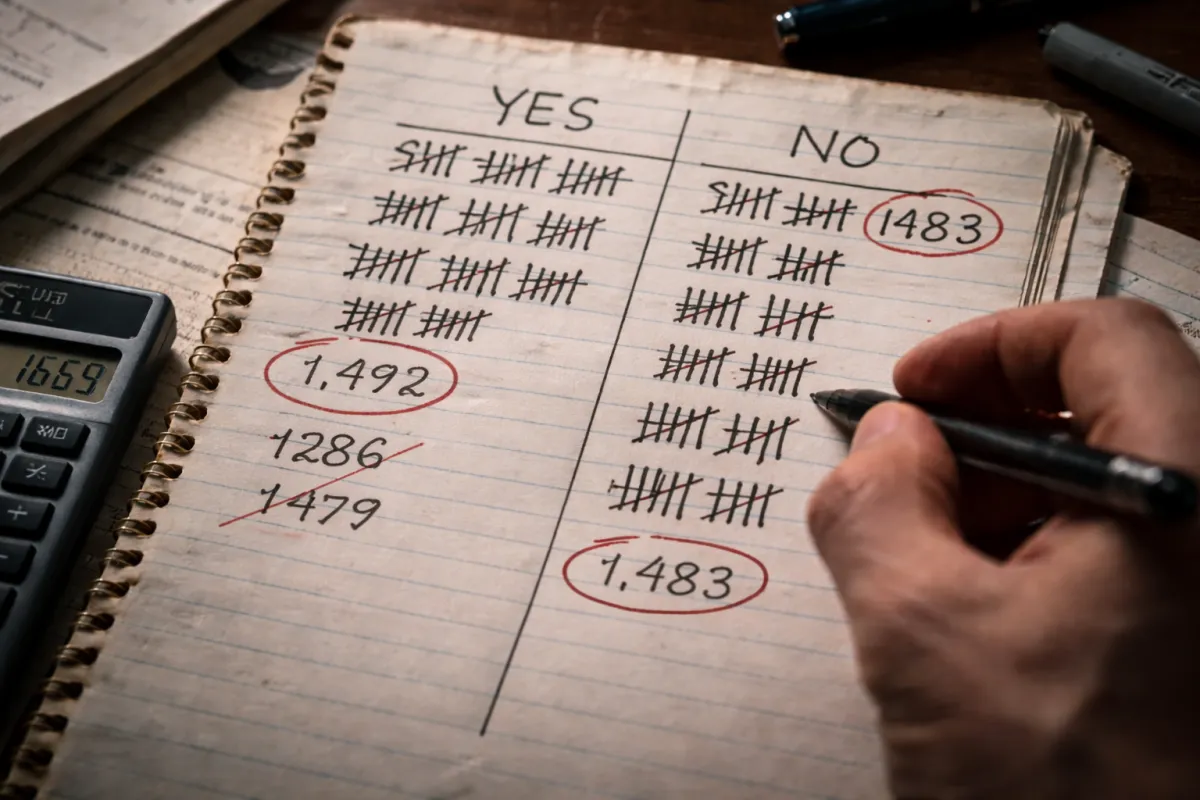
A democratic socialist named Tanmay Shah just flipped Cleveland City Council Ward 12 by nine votes.
Nine votes. Roughly 3,000 total ballots cast. A low-turnout off-year race that most people on your side didn't even know was happening — and that's precisely the point.
This wasn't a fluke. It wasn't luck. It was the result of a lean, volunteer-driven coalition that mapped the ward, worked the doors, targeted voters the incumbent had written off, and won the provisional ballot count 18 to 5. Shah spent under $50,000. His volunteers did the rest.
I'm not telling you this to demoralize you. I'm telling you because the local machine still responds to organized will — and right now, someone else is operating it while too many constitution-minded conservatives are still waiting for the right moment to get serious.
There is no better moment than the one that just passed you by.
"Nine votes. That's not a margin. That's a message."
The Real Reason We Keep Losing These Races
Let me be direct with you, because I think you can handle it.
Conservative grassroots leaders don't lose local races because they lack conviction. They don't lose because the other side is smarter or more righteous or better funded. They lose because of a gap — a civic strategy gap — that most people on our side have never been told exists, let alone taught how to close.
Thomas Sowell said it plainly: "The most basic question is not what is best, but who shall decide what is best."
That question is being answered right now in city councils, school boards, and county commissions across this country. And in too many of those rooms, the people who believe in liberty, self-governance, and constitutional authority are not the ones deciding. Not because they can't be. Because they haven't shown up with a system.
Shah's campaign ran a disciplined ground game in exactly the kind of low-turnout environment — 20 to 25 percent typical for off-year council races — where focused, organized will becomes decisive. They identified voters the incumbent had ignored. They made multiple contacts. They treated provisional ballots as a deliberate strategy, not an afterthought. They won by nine votes because they operated while the other side assumed.
Here's the Extreme Ownership truth that stings: no one made your coalition sit this one out. No one forced the scattered effort, the competing priorities, the reaction-mode organizing. Those were choices. They had consequences. And the only way forward is to own that completely — and change it.
As Jocko Willink puts it:
"Extreme Ownership. Leaders must own everything in their world. There is no one else to blame."
The Framework: Direction, Discipline, and Momentum
The Operator Method runs on three non-negotiable pillars. They are not complicated. They are just unforgiving — because the machine doesn't reward effort, it rewards precision.
Direction means locking in on one winnable fight and refusing to be pulled off it. Not zoning overreach and school curriculum and budget transparency and the water bill. One fight. One message. Full force behind it. Shah's team didn't try to fix Cleveland — they ran on affordable housing, groceries, and reliable services in one redrawn ward, and they never blinked. Constitution-minded leaders have to develop that same discipline of focus, even when every other local outrage is screaming for attention.
Discipline means your coalition operates like a unit, not a crowd. One message. Clear roles. No tolerance for the side debates and ego friction that bleed energy from the main effort. The Federalist No. 70 makes the case Hamilton was already making in 1788: "Energy in the executive is a leading character in the definition of good government." Energy without unity is just noise. Discipline is what converts energy into institutional power.
Momentum means you treat every outcome — every win, every loss, every nine-vote margin — as intelligence. You don't mourn it. You map it. Who showed up? Who didn't? Where were the contact gaps? Which precincts were underleveraged? Every race, won or lost, is data that makes your next campaign sharper.
This is not activism. This is operation.
"The machine doesn't reward effort. It rewards precision."
What the Cleveland Playbook Actually Teaches Us
I want to be careful here, because the instinct on our side is often to say "copy what they did" — and that's the wrong frame entirely.
You are not trying to imitate a democratic socialist ground game. You are trying to operate at the level this fight has always demanded, from a foundation of constitutional principle that their side will never have. That's a different posture. And it's a stronger one.
What Shah's campaign actually demonstrates — stripped of ideology — is the power of margin discipline in low-turnout environments. When overall participation is low, the race belongs to whoever has the most organized, motivated, multiply-contacted voters. That's it. That's the whole equation.
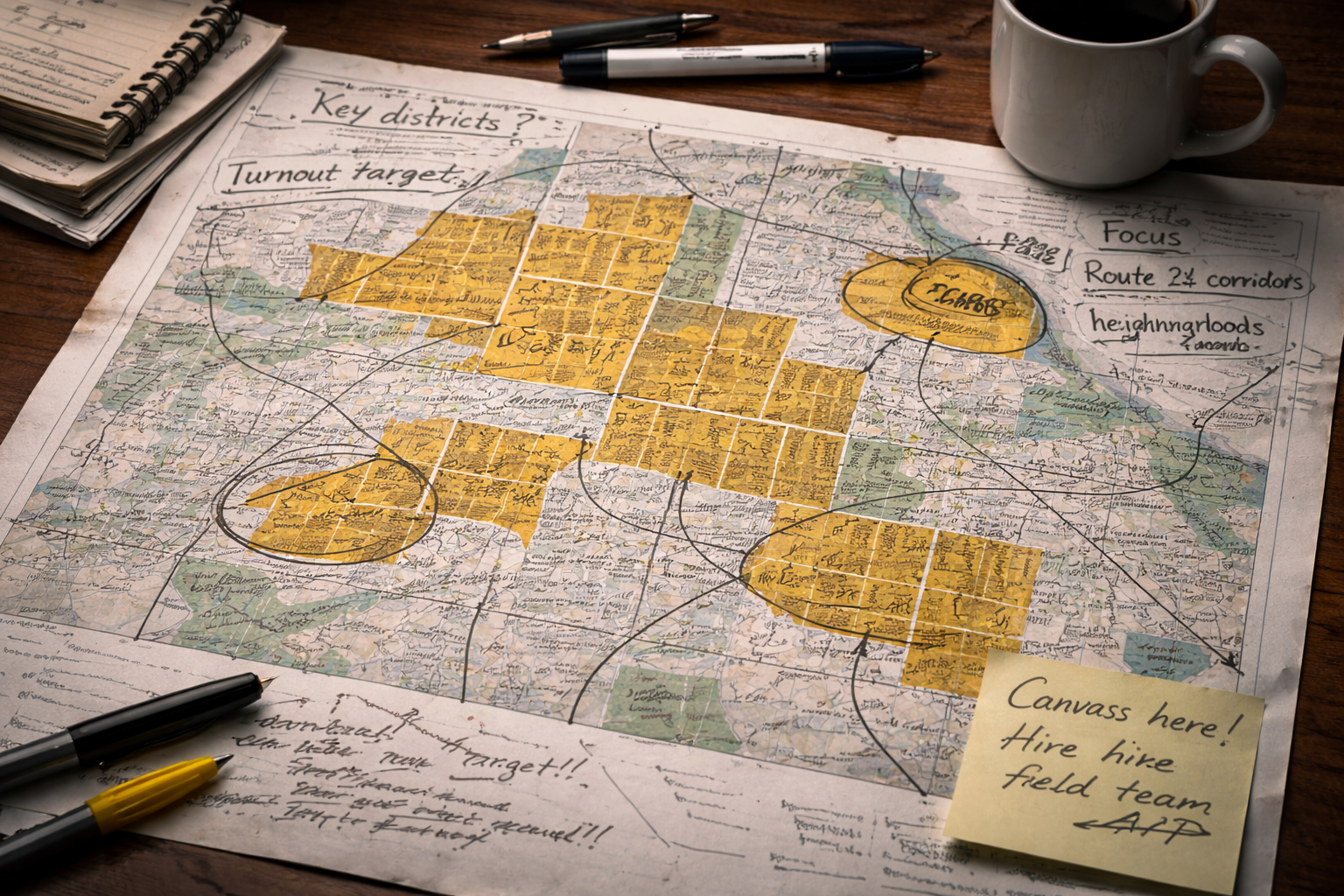
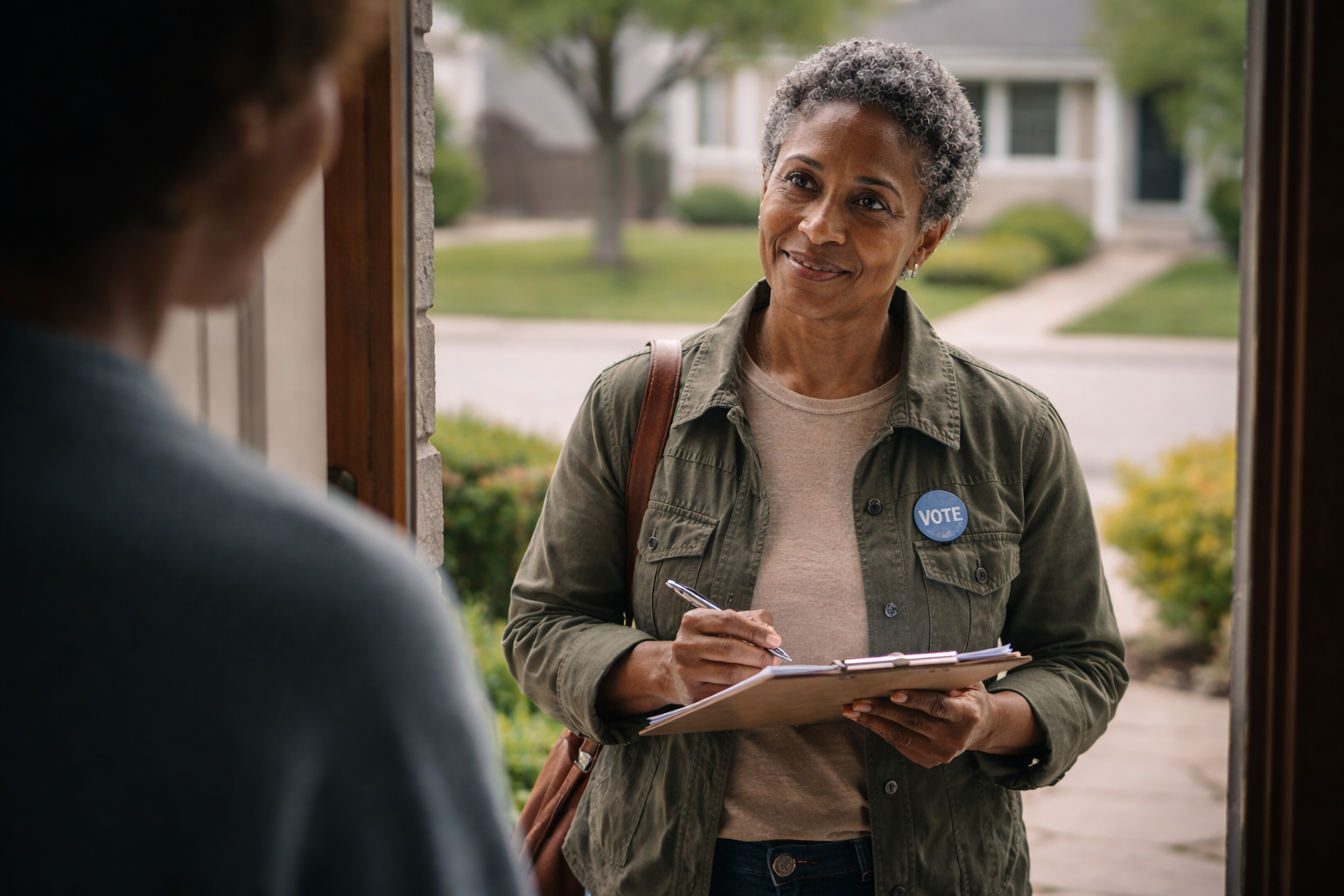
For a constitution-minded coalition, that means starting earlier than feels necessary. It means mapping your ward or precinct at the granular level — voter file, contact history, turnout patterns — before you recruit a single volunteer. It means identifying the people in your community who have been directly harmed by the policies you're fighting: the homeowner blindsided by a zoning change, the parent shut out of a curriculum decision, the small business owner who lost a contract to an insider deal. Those are your doors. Those are your people. And they are waiting for someone to knock.
It means recruiting from your aligned networks — parent groups, property rights advocates, faith communities, taxpayer coalitions — and training every volunteer on message discipline before they ever touch a door. It means running your provisional ballot strategy like it might decide the race, because nine votes in Cleveland just proved that it can.
Robert Greene writes in The 33 Strategies of War: "The greatest danger in battle is the moment of victory — when your guard drops and you assume the work is done." The inverse is also true: the greatest opportunity is the moment your opposition assumes they've already won. That's the low-turnout off-year race. That's Ward 12. That's your school board meeting next Tuesday.
The Identity Shift That Makes All of This Work
Here's what I know from doing this work — and from learning the harder version of this lesson in my own life before I ever set foot in a city council chamber:
The tactics are learnable. The frameworks are transferable. The playbook can be taught.
But none of it works until something shifts inside the person running it.
You have to stop seeing yourself as a concerned citizen reacting to what the other side does — and start seeing yourself as a civic operator with constitutional authority and a responsibility to use it. That is not a small shift. It is a complete identity reframe. And it is the difference between a coalition that shows up when things get bad enough and a coalition that is already positioned when the vote happens.
Jocko's principle cuts both ways here. Extreme Ownership means owning the loss in Cleveland Ward 12 — acknowledging that organized, disciplined action from our side could have changed that outcome. But it also means owning what comes next. No excuses. No hand-wringing. No waiting for a better candidate or a more convenient race or a higher-turnout environment.
"It's not what you preach, it's what you tolerate." — Jocko Willink
What are you tolerating right now in your precinct, your ward, your school district? What ground is eroding while your coalition waits for someone else to draw the map?
Sovereignty isn't granted. It's recognized and exercised. Your power as a sovereign citizen can only be diminished if you allow it to be. The machine responds to organized will. That is not theory. That is the nine-vote lesson from Cleveland Ward 12.
"Sovereignty isn't granted. It's recognized and exercised. Your power as a sovereign citizen can only be diminished if you allow it to be."
Hope Is a Catalyst for Action — Not a Feeling
Life doesn't have to be this way. It was never meant to be this way.
Tanmay Shah's nine-vote win is not a reason for despair. It is a clarity moment — the kind that cuts through the noise and shows you exactly what is at stake in races most people on your side don't even track. The local machine is not broken. It is not captured permanently. It responds to organized will, and it always has.
Hope, in this context, is not wishful thinking about the next election cycle. It is the fierce resolve that rises when the world says back down, but your soul refuses to yield. It is the seed of every rebirth, the root of every revolution, and the trunk of every righteous stand against what looks, from the outside, like impossible odds.
But resolve without a system is just emotion.
When you combine clear Direction, iron Discipline, and sustained Momentum with practical civic strategy — when you stop reacting and start operating — nine votes stops being a defeat and starts being a blueprint.
You don't need more outrage. You need the system that turns outrage into wins.
Ready to Build the Coalition That Wins the Close Ones?
If you're looking at a local race, a school board fight, or a council seat in your ward and thinking we could win this if we had a real strategy — the 90-Day Campaign Strategy Intensive is where we build it. We'll map your power structure, design your coalition approach, and install the execution system that turns motivated citizens into disciplined operators.
Book a Call for the Campaign Strategy Intensive →
Not in an active fight yet, but done waiting for someone else to fix it? The 90-Day Civic Leadership Intensive is where you build the strategic foundation — the civic vocabulary, the frameworks, the community — so when your moment comes, you're ready to operate.
Book a Call for the Civic Leadership Intensive →