
How to Turn Local Frustration into Institutional Power

You already know the pattern. You've probably lived it.
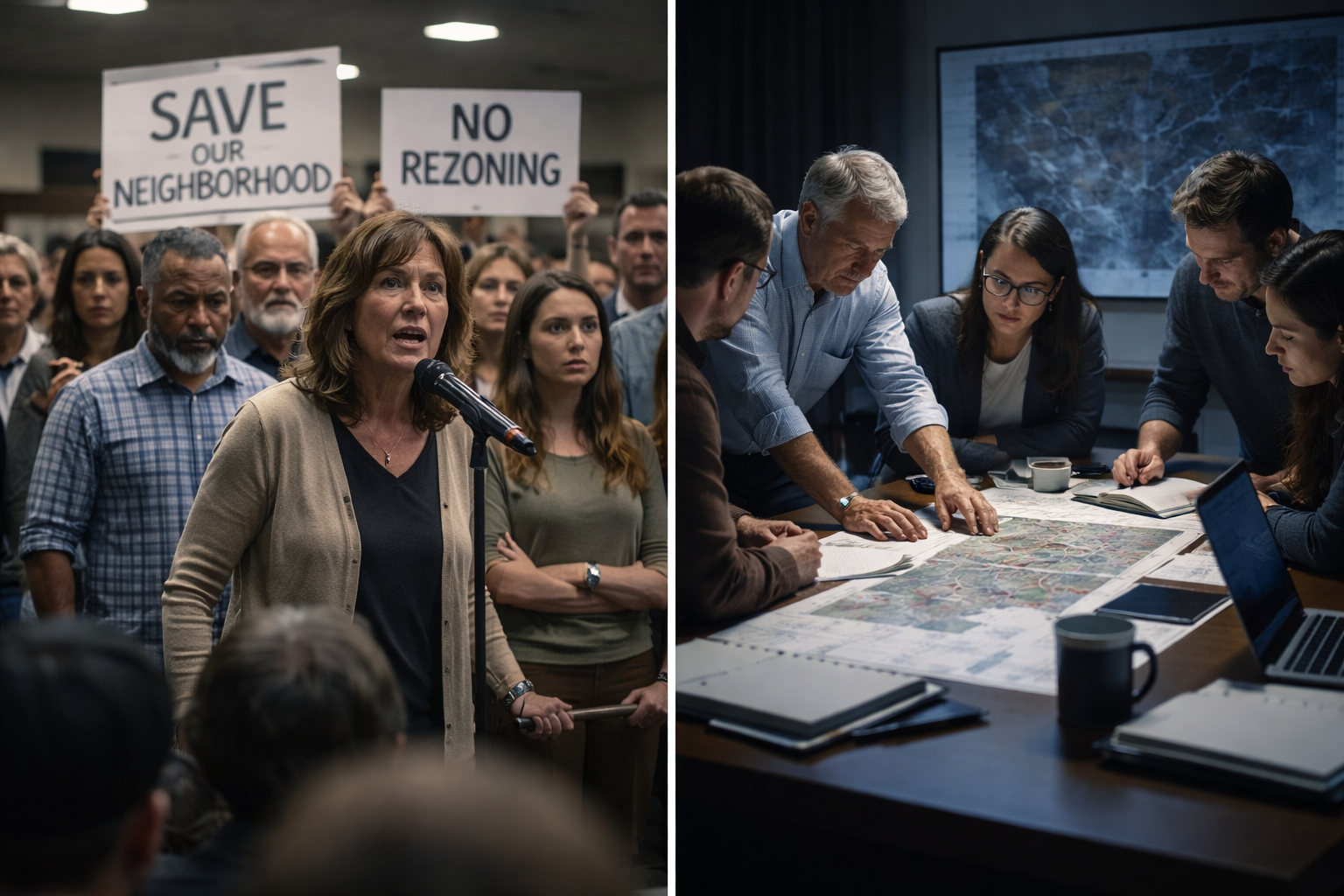
Grassroots conservatives show up with conviction, energy, and numbers. They fill the room. They sign up for public comment. They post the videos. And then they watch the policy sail through anyway — the zoning change, the curriculum, the tax hike — as if no one said a word.
It's not because they were wrong. It's not because they didn't care enough. It's because passion without a power map is just noise in a room full of people who know exactly how to ignore it.
The Save Boca coalition in Florida just proved it doesn't have to go that way. Last week, they didn't just protest overdevelopment — they swept three city council seats, defeated entrenched incumbents, and shifted the balance of local power in a single election night.
This wasn't luck. This wasn't a fluke. This was the direct result of disciplined civic strategy.
"Most grassroots leaders treat local government like a debate club. Operators treat it like a power structure — and that single shift changes everything."
Why Grassroots Conservatives Keep Losing Locally
Here's the hard truth — and I say this as someone who learned it the brutal way: most conservative coalitions lose not because they lack courage, but because they refuse to own the gap in their own civic literacy.
That's an Extreme Ownership moment right there, and it stings. Jocko Willink's core principle is that the leader owns everything — the wins and especially the losses. No one made you skip the planning commission meeting. No one forced your coalition to show up for testimony and call it a strategy. That was a choice, and it had a cost.
The real decision-makers in your city — the ones influenced by developers, teachers' union staff, and organized special interests — are not waiting for you to get your act together. They are operating while you're reacting. They are mapping power while you're making signs.
Testimony feels righteous. It rarely moves the machine. Without a clear map of who actually holds leverage, where the real pressure points exist, and how to build sustained followership beyond one fired-up meeting, even the strongest grassroots surge dissipates like steam off asphalt.
This isn't a failure of passion. It's a failure of strategy. And the first step toward fixing it is owning that — completely, without excuse.
The Framework: Direction, Discipline, and Momentum
Real civic strategy runs on three non-negotiable elements — the foundation of The Operator Method: Direction, Discipline, and Momentum.
Direction means clarity on the single winnable fight. Save Boca didn't try to fix every problem in Boca Raton at once. They locked in on one clear mission: stop the overdevelopment that was gutting their neighborhoods. One fight. One message. Full force.
Discipline means ruthless focus under pressure. One message. No side debates. Every volunteer knows the script and holds the line — even when the opposition tries to muddy the water or bait you into a different argument. Discipline is what separates a movement that wins from a coalition that splinters at the first sign of friction.
Momentum means turning one small win into institutional power. Each victory proves to your coalition — and to the opposition — that the machine can be moved. That proof recruits your next wave of leaders. It shifts the psychology of your community from resignation to agency.
The tactical engine underneath all three is power mapping.
In under a week, any grassroots team can build a working map of their local power structure: every elected official's voting record and who funds them, the staffers who actually draft policy language, which community organizations or business groups have the council's ear, where the leverage points are and what makes each one move.
Once you have that map, you stop guessing and start operating. Testimony becomes one tool among many — not the only tool. You begin applying precise, sustained pressure at the decision points that actually matter. You make "no" politically expensive for the people who need to say yes.
This is not activism. This is operation.
"Sovereignty isn't granted. It's recognized and exercised. Your power as a sovereign citizen can only be diminished if you allow it to be."
What Actually Happened in Boca Raton
They mapped the council. They aligned around one clear fight. They ran a disciplined ground game that turned widespread community frustration into organized, targeted votes. And when the night was over:
Michelle Grau won with 65%
Jon Pearlman took 51%
Stacy Sipple secured 54%
Incumbents who had backed the development agenda were replaced. A policy trajectory that felt inevitable — the kind that makes people throw up their hands and say nothing ever changes — was reversed in a single election cycle.
The same playbook is replicable anywhere. School board challengers in Virginia. County commission organizers in Texas. The pattern is identical in every case: leaders stopped treating local government as theater and started treating it as a system that responds to precise, sustained pressure. They owned the outcome — both the strategy and the execution — and they won.

"It's not what you preach, it's what you tolerate." — Jocko Willink, Extreme Ownership
The Transformation — From Concerned Citizen to Civic Operator
When you master civic strategy, something deeper shifts — and I'm not being poetic about it. I mean something changes in the way you see yourself in relation to your government.
I learned this in a courtroom, not a classroom. I had to pursue a civil protection order myself — a case type with less than a 4% win rate. I won. What I discovered in that process wasn't just legal literacy. It was a truth that rearranged everything: my power as a sovereign citizen can only be diminished if I allow it to be. If I hit a roadblock — systemic or otherwise — there is always another path to the destination, even if it takes a few more steps.
That's the same truth I watch grassroots leaders discover when they stop reacting and start operating.
You stop seeing yourself as a spectator at someone else's meeting. You start recognizing that the machine is not immovable — it is just unmapped. And once you map it, you stop asking for permission and start exercising structural authority.
The person who once asked "why doesn't anyone listen?" becomes the operator who can clearly articulate the signal through the noise — and move the machine in the direction of sanity, liberty, and human flourishing.
From scattered frustration to calm confidence. From reaction to strategic positioning. From concerned citizen to civic leader who builds followership and delivers measurable wins. That identity transformation is not a side effect of this work. It is the point.
"Hope is not passive optimism. It is a catalyst for action — the fierce resolve that rises when the world says back down, but your soul refuses to yield."
Hope Is a Catalyst for Action — Not a Feeling
Life doesn't have to be this way. It was never meant to be this way.
The Save Boca sweep is fresh evidence that the machine can be moved — when grassroots leaders choose operation over reaction, ownership over excuse, and strategy over outrage.
Hope, in this context, is not wishful thinking. It is not a vibe or a posture. It is the fierce resolve that rises when the world says back down, but your soul refuses to yield. It is the seed of every rebirth, the root of every revolution, and the trunk of every righteous stand against what looks, from the outside, like impossible odds.
But hope without a system is just feelings.
When you combine clear Direction, iron Discipline, and sustained Momentum with the practical tools of civic strategy, institutional power becomes attainable — not for some mythical "perfect candidate" or some better-resourced coalition. For you. Right now. In your city, your school district, your county.
You don't need more motivation. You need the system that turns motivation into wins.
Ready to Stop Reacting and Start Operating?
If you're in an active fight right now — a zoning battle, a school board race, a county commission push — and you're tired of showing up without a strategy that moves the machine, the 90-Day Campaign Strategy Intensive is where we build it together. We'll map your power structure, install your execution system, and get you operating instead of reacting — within 90 days.
Book a Call for the Campaign Strategy Intensive →
Not in an active fight yet, but done waiting for someone else to fix it? The 90-Day Civic Leadership Intensive is where you build the strategic foundation — the civic vocabulary, the frameworks, the community — so when your moment comes, you're ready to operate.
Book a Call for the Civic Leadership Intensive →